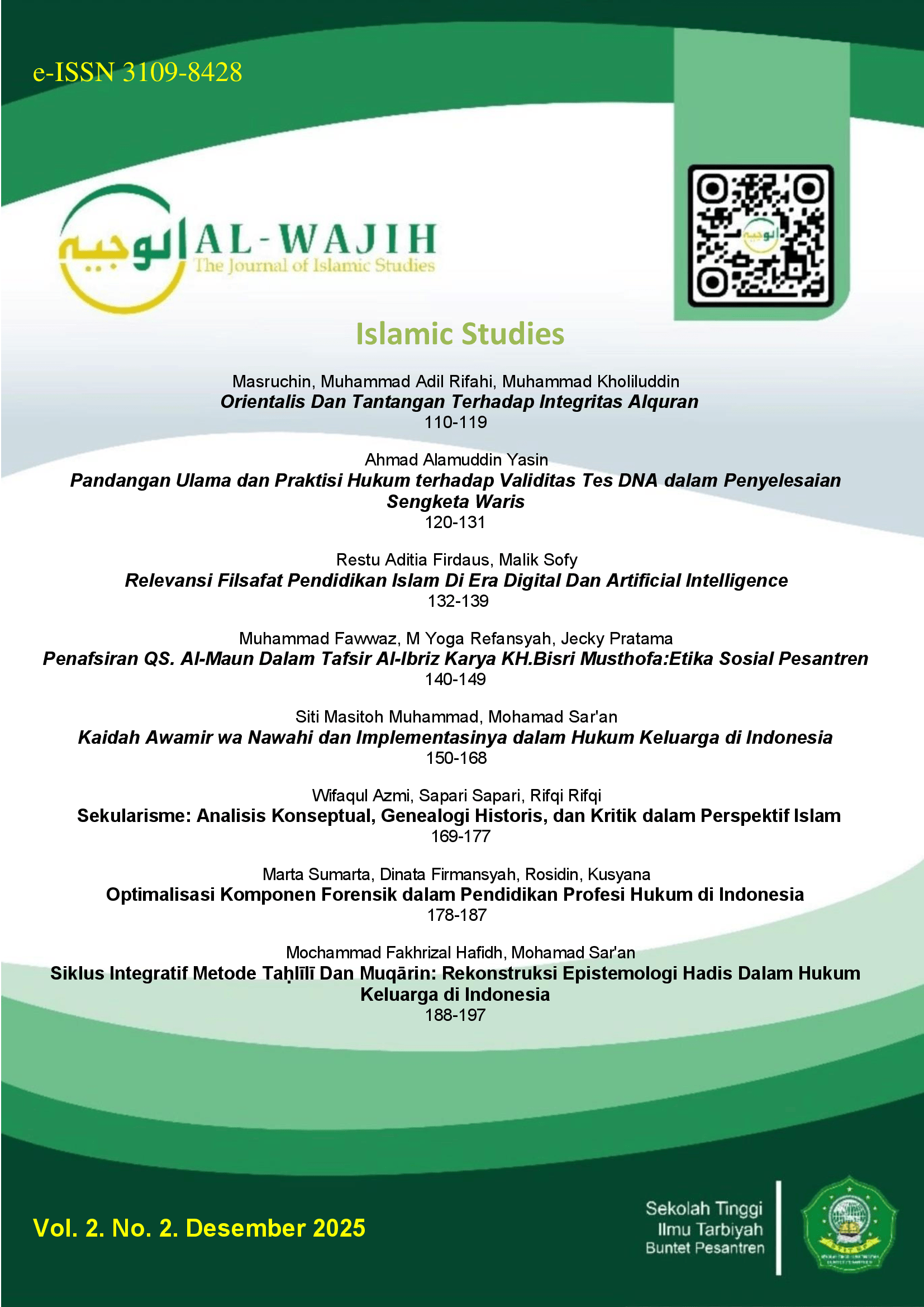
Penafsiran QS Al Maun Dalam Tafsir Al Ibriz Karya KH.Bisri Musthofa : Etika Sosial Pesantren
DOI:
https://doi.org/10.54213/j0szp921Keywords:
Surah al-Ma'un, Tafsir Al-Ibriz, KH. Bisri Mustofa, social ethicsAbstract
This paper examines the interpretation of Surah al-Ma'un in the Tafsir Al-Ibriz by KH. Bisri Musthofa and its relevance to the formation of social ethics in Islamic boarding schools (pesantren). Through a literature study and content analysis approach, this research finds that KH. Bisri Musthofa understands Surah al-Ma'un as a critique of religious practices that are merely ritualistic without social sensitivity. In his interpretation, values such as concern for the poor, empowerment of the weak, and rejection of stinginess and ostentation become the ethical foundations for students and the Islamic boarding school community. This interpretation not only emphasizes theological aspects but also builds social awareness contextual to the lives of rural Javanese communities. This study concludes that KH. Bisri Musthofa's interpretation makes a significant contribution to strengthening the tradition of Islamic boarding school social ethics oriented towards humanity, solidarity, and social benefit.
Downloads
References
Abbas, F. M. (2019). Studi Tafsir Kontemporer: Telaah Buku “Alqur’an Kitab Sastra Terbesar.” Dalam Tsaqafatuna: Jurnal Ilmu Pendidikan Islam, 1(2), 80–88.
Asif, M. (2016). Tafsir Dan Tradisi Pesantren. Suhuf, 9(2), 241–264.
Firmansyah, F. (2024). Pendidikan Etika Sosial Berbasis Pesantren: Internalisasi Melalui Tradisi Santri.
Gunawan, A. R., Wathani, S., Hanbali, Y., & Roni, M. (2021). Teologi Inklusif Kehidupan Pesantren: Tasamuh Sebagai Etika Sosial. Eduprof: Islamic Education Journal, 3(2), 130–150.
Gusmian, I. (2015). Tafsir al-Qur’an di Indonesia: Sejarah dan Dinamika. Nun: Jurnal Studi Alquran Dan Tafsir Di Nusantara, 1(1).
Hakim, L. N., & Bayyinah, I. (2023). Etika Sosial Perspektif Mufassir Nusantara: Kajian Qs. Al-Hujurat Ayat 9-13 Dalam Tafsir Al-Ibriz. Al-Shamela: Journal of Quranic and Hadith Studies, 1(1), 70–86.
Imtyas, R. (2020). Tafsîr Al-Ibrîz Lima’rifati Tafsîr Al-Qur’ân Karya Kh Bisri Musthafa. Ushuluna: Jurnal Ilmu Ushuluddin, 1(2), 64–74.
Maksum, G., & Afiyah, N. (2023). Pemikiran dan Aspek Lokalitas Tafsir Al-Ibrīz Karya Kh. Bisri Mustofa. Adh Dhiya| Journal of the Quran and Tafseer, 1(1), 79–95.
Maulana, Y. (2025). Hubungan Tafsir Al-Ibriz Karya Kh Bisri Mustofa Dengan Tafsir Al-Mubarak Karya Kh Taufiqul Hakim. UIN Raden Intan Lampung.
Muqit, A. (2018). Profesionalisme Kiai dalam Pengelolaan Pondok Pesantren dalam Konteks Kemodernan. Jurnal Pendidikan Islam Indonesia, 2(2), 139–158.
Musthofa, B. (1960). Tafsir Al-Ibrīz li Ma‟ rifati Tafsir al-Qur‟ an al-Aziz Bi al-Lughoh Al-Jawiyah. Kudus: Menara Kudus. Jilid.
Pradikta, R. (2017). Kemiskinan Dalam Perspektif Kitab Tafsir Al-Ibriz Li Ma’rifat Tafsir Al-Qur’an Al-‘Aziz Karya: KH Bisri Mustofa. IAIN Salatiga.
Tuba, M. H. (2023). Etika Sosial Perspektif Tafsir Al-Ibriz Karya Bisri Mustofa. Universitas Ptiq Jakarta.
Wahidi, R. (2015). Hierarki Bahasa Dalam Tafsir al-Ibrīz li Ma ‘rifah Tafsīr Al-Qur’ān Al-‘Azīz karya KH Bisri Musthofa. Suhuf, 8(1), 141–159.
 Focus & Scopes
  Author Guidelines
  Peer Review Process
  Publication Ethics & Malpractice
  Contact
  Reviewer Team
  Editorial Team
  Template Document
  Article Processing Charge
  Copyright Notice
 Open Access Policy